
Water damage can happen without warning. A burst pipe, overflowing appliance, heavy rainstorm, or sewer backup can quickly disrupt life at home or business. In Fort Myers and throughout Lee County, tropical weather, hurricanes, seasonal downpours, and high humidity create unique challenges that make fast action especially valuable. The first hours after a water loss often determine how much of a property can be restored and how long recovery will take.
Understanding what happens during emergency water damage restoration helps property owners make informed decisions while reducing uncertainty during an already stressful situation. Whether you own a waterfront home in Cape Coral, manage a commercial building in Naples, oversee rental properties in Lehigh Acres, or operate a business in Bonita Springs, knowing what to expect allows you to respond with confidence.
At Rytech Restoration of Lee & Collier Counties, we believe education is one of the best tools property owners have before an emergency ever happens. The following guide explains how professional water mitigation works, why rapid drying matters, and what steps help protect residential and commercial properties throughout Southwest Florida.
Understanding Emergency Water Damage in Fort Myers
Emergency water damage occurs whenever unwanted water enters a structure quickly enough to threaten building materials, contents, or indoor environmental conditions. Unlike a slow plumbing drip that develops over months, emergency losses often happen suddenly and require immediate attention to reduce additional damage.
Throughout Fort Myers, Cape Coral, Estero, Sanibel, and Fort Myers Beach, restoration teams frequently respond to emergencies caused by hurricane rainfall, storm surge, broken plumbing lines, failed water heaters, overflowing washing machines, roof leaks, and damaged irrigation systems. Commercial properties may also experience sprinkler failures or water released during fire suppression activities.
Water rarely remains where it first appears. Gravity allows it to travel beneath flooring, behind drywall, inside insulation, and through structural framing. Materials that appear dry on the surface may still contain elevated moisture levels beneath finished surfaces. This hidden migration explains why professional moisture inspections play such a significant role during emergency restoration.
Residential homes often contain engineered wood flooring, drywall, cabinetry, insulation, and decorative trim that readily absorb moisture. Commercial buildings frequently include large open spaces, suspended ceilings, office partitions, and complex mechanical systems that create additional pathways for water movement. Understanding how water behaves inside different construction materials allows restoration professionals to develop effective drying plans.
Common Causes of Emergency Water Damage Throughout Southwest Florida
No two water losses are identical. Some occur instantly, while others develop quietly until visible damage finally appears.
In Lee County and neighboring Collier County, severe weather remains one of the leading contributors to emergency restoration calls. Tropical storms, hurricanes, and intense afternoon thunderstorms can overwhelm drainage systems, damage roofing materials, and allow water to enter buildings through windows, doors, roof penetrations, or exterior wall assemblies.
Indoor plumbing failures create another common source of sudden water damage. Frozen pipes may be uncommon in Southwest Florida, but aging supply lines, failed water heaters, broken ice maker connections, dishwasher leaks, and deteriorated washing machine hoses continue to affect homes and businesses every year.
Gradual issues can also become emergencies when left unnoticed. Small roof leaks may slowly saturate attic insulation before staining ceilings. Minor plumbing leaks hidden beneath cabinets or behind walls can remain undetected until flooring begins to warp or drywall softens.
Fire suppression efforts create another category of water loss. After firefighters extinguish a structure fire, significant amounts of water may remain inside the building, requiring prompt extraction and structural drying.
Identifying and correcting the source of the water intrusion remains one of the first priorities before drying begins. Otherwise, additional moisture may continue entering the structure, delaying restoration efforts.
Signs Your Property Needs Immediate Attention
Some water losses are obvious. Others begin quietly before becoming visible days later.
Standing water, flooded rooms, dripping ceilings, or water flowing through walls require immediate evaluation. Even small amounts of standing water can migrate beneath flooring and into adjacent rooms.
Other warning signs develop more gradually. Hardwood flooring may begin cupping or buckling. Laminate flooring often separates at seams. Paint may blister, wallpaper may loosen, and drywall can soften or swell as moisture accumulates behind finished surfaces.
Many property owners first notice a persistent musty odor. While odors alone do not identify the extent of damage, they often indicate prolonged moisture exposure that deserves further investigation.
An unexplained increase in monthly water usage may also signal a concealed plumbing leak. If the water bill rises without a change in household consumption, hidden moisture could already be affecting structural materials.
According to ANSI/IICRC S500 professional restoration practices, mold growth can begin developing within approximately 24 to 48 hours when sufficient moisture and favorable environmental conditions exist. Early inspection and drying reduce the opportunity for elevated microbial growth to develop.
Understanding Water Categories and Classes
Not all water losses carry the same health risks or require identical restoration procedures. Restoration professionals evaluate both the contamination level of the water and the extent of material saturation before developing a drying strategy.
Water categories describe the source and contamination level of the water itself.
Category 1 originates from a sanitary source, such as a broken water supply line or overflowing sink supplied by clean water. While initially considered clean, Category 1 water can deteriorate if left untreated or exposed to contaminants.
Category 2 contains a greater level of contamination that may cause discomfort or illness through exposure. Common examples include washing machine discharges, dishwasher overflows, or sump pump failures.
Category 3 presents the highest contamination risk. Sewage backups, toilet overflows involving waste, and floodwaters entering from outside frequently fall into this category. These situations require specialized safety procedures, containment, and protective equipment.
Water classes describe how deeply moisture has affected building materials.
Class 1 losses involve limited moisture absorption with relatively small affected areas.
Class 2 losses extend into structural materials and multiple porous surfaces.
Class 3 situations often involve ceilings, walls, insulation, and large volumes of trapped moisture throughout the structure.
Class 4 losses affect materials with very low permeability, including hardwood flooring, plaster, concrete, masonry, or dense structural components that require specialized drying techniques and extended monitoring.
Proper classification helps restoration professionals determine equipment requirements, drying goals, and monitoring schedules throughout the project.
Why Fast Response Changes the Outcome
Water damage becomes more complicated with every passing hour.
Drywall begins absorbing moisture quickly. Wood framing expands as water penetrates cellular structures. Flooring adhesives weaken, insulation loses effectiveness, and finishes begin deteriorating. As moisture migrates deeper into building assemblies, additional demolition may become necessary simply to access trapped water.
Prompt stabilization often allows more materials to be restored rather than removed.
Professional drying also reduces the opportunity for elevated indoor humidity to affect previously unaffected areas. Moisture does not remain confined to one room. It moves through the air, increasing humidity levels that can affect neighboring rooms, cabinetry, furnishings, and structural materials.
Insurance carriers generally expect reasonable steps to reduce additional damage after a covered loss occurs. Thorough documentation, moisture readings, photographs, and daily monitoring reports help demonstrate the progression of the restoration process while supporting claim documentation.
What Happens During Emergency Water Damage Restoration?
Every emergency restoration project begins with understanding the extent of the damage before equipment arrives.
The first step involves a detailed inspection using moisture meters, thermal imaging technology, and visual assessment techniques to determine where water has traveled. Moisture mapping creates a documented picture of affected materials and helps establish drying goals.
After inspection, standing water is removed using commercial extraction equipment designed to recover significantly more water than consumer-grade vacuums. Removing liquid water first dramatically improves drying efficiency.
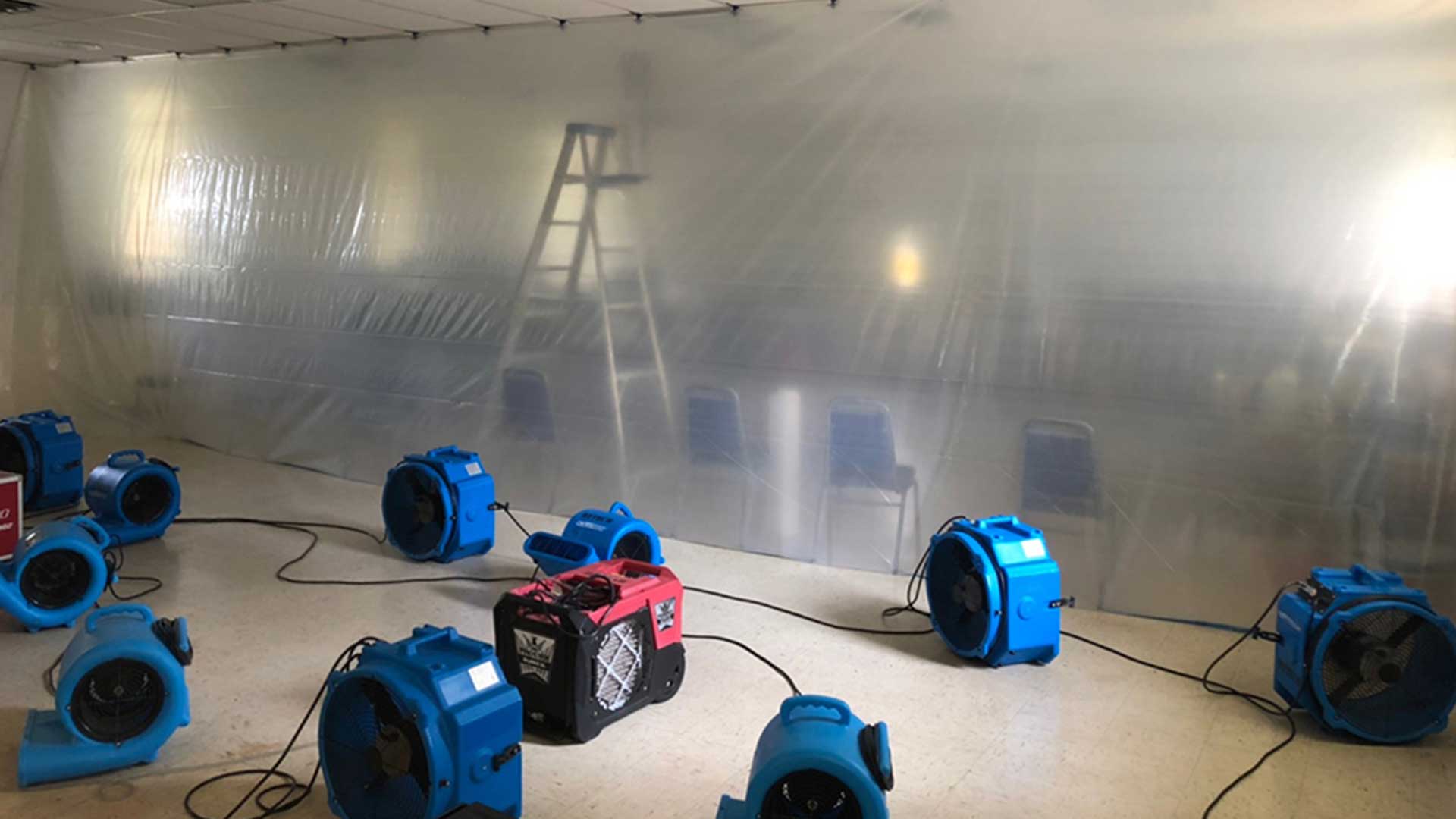
Once extraction is complete, technicians strategically position air movers and commercial dehumidifiers to create controlled evaporation and moisture removal. Equipment placement follows scientific drying principles rather than simply filling rooms with fans.
Throughout the drying process, technicians monitor moisture content within structural materials using specialized instruments. Equipment adjustments occur as drying progresses to maximize efficiency while confirming that materials are returning toward established drying goals.
Contents, surfaces, and affected materials may also undergo cleaning procedures appropriate for the category of water involved. Throughout the project, detailed documentation supports communication with property owners and insurance representatives while providing a clear record of drying progress.
Professional Water Extraction and Drying Methods
Many property owners initially believe removing visible water solves the problem. In reality, extraction marks only the beginning of the drying process.
Professional extraction equipment removes large quantities of standing water before evaporation begins. Once liquid water is removed, controlled airflow encourages moisture inside materials to evaporate into the air, while industrial dehumidifiers capture that moisture and remove it from the indoor environment.
Moisture meters provide direct readings from wood, drywall, flooring, and other structural materials. Thermal imaging cameras help identify temperature differences that may indicate hidden moisture requiring additional inspection.
This science-based approach differs significantly from using household fans or portable dehumidifiers alone. Consumer equipment generally cannot maintain the controlled drying conditions needed for larger losses or hidden moisture inside structural assemblies.
As drying progresses, technicians continue measuring moisture levels rather than relying solely on appearance. Materials often look dry long before they have reached acceptable moisture levels internally. Continuous monitoring helps verify that drying goals have been achieved before equipment is removed.
"Southwest Florida properties face unique water damage challenges because our climate combines heavy rainfall, hurricane exposure, and year-round humidity. We've worked with everything from coastal homes on Sanibel to commercial buildings in Fort Myers and Naples. Every structure responds differently to moisture, which is why detailed inspections, accurate moisture mapping, and science-based drying make such a difference in protecting the property."
Jon K. Lavender, Owner, Rytech Restoration of Lee & Collier Counties
Equipment Used During Professional Water Damage Restoration
The equipment used during emergency water damage restoration directly affects how efficiently a structure dries. Professional restoration teams select equipment based on the size of the affected area, the category of water, the construction materials involved, and current moisture readings rather than using a one-size-fits-all approach.
Commercial air movers create controlled airflow across wet surfaces, accelerating evaporation from flooring, walls, and structural components. Industrial refrigerant and desiccant dehumidifiers remove moisture from the air, preventing that humidity from being reabsorbed into building materials. Moisture meters measure moisture content inside wood, drywall, and concrete, while infrared cameras help identify hidden moisture behind finished surfaces that may not be visible during a standard inspection.
When microbial contamination is present, HEPA-filtered equipment may be incorporated into containment areas to reduce airborne particles during cleaning and removal activities. Depending on the water category and affected materials, cleaning agents and antimicrobial products may also be used according to ANSI/IICRC S500 and S520 recommendations. The combination of advanced technology and continual moisture monitoring allows drying plans to adapt as conditions improve throughout the project.
Mold Prevention Begins With Rapid Drying
Fort Myers properties face year-round humidity that creates favorable conditions for microbial growth whenever excess moisture remains inside a structure. Water damage and mold are closely connected because mold only needs moisture, organic material, and time to begin developing.
Professional restoration focuses on removing excess moisture before elevated microbial growth becomes established. According to ANSI/IICRC guidance, mold may begin developing within approximately 24 to 48 hours when moisture conditions remain favorable. That timeline highlights why emergency response and structural drying are closely connected.
Professional mold remediation in Fort Myers extends far beyond cleaning visible growth. Restoration professionals first identify the moisture source, establish containment to reduce the spread of spores, remove affected materials when necessary, and clean remaining structural components using procedures appropriate for the conditions present. The objective is to reduce harmful mold spores in the indoor environment while returning the property to a safe, dry condition.
Property owners throughout Fort Myers, Cape Coral, Naples, Lehigh Acres, Bonita Springs, and surrounding communities often benefit from having moisture levels evaluated even when visible mold has not yet appeared. Early intervention frequently limits both the scope of remediation and the disruption to daily life.
Safety Comes First During Emergency Water Damage
Water damage introduces more than wet building materials. It also creates safety concerns that should never be overlooked.
Electrical hazards become a priority whenever water reaches outlets, wiring, electrical panels, or appliances. Flooded rooms may also conceal slip hazards beneath standing water or damaged flooring. Structural materials weakened by prolonged moisture exposure can become unstable, particularly ceilings that have absorbed significant amounts of water.
Category 2 and Category 3 water losses present additional health concerns because they may contain bacteria, sewage, chemicals, or other contaminants. These situations require specialized personal protective equipment, controlled work areas, and cleaning procedures designed to reduce cross-contamination.
Professional restoration technicians wear PPE appropriate for the conditions they encounter, including gloves, protective clothing, eye protection, and respiratory protection when necessary. Containment barriers and negative air systems may also be established during certain projects to isolate affected areas from occupied portions of the property.
Knowing when portions of a home or commercial building should remain unoccupied during restoration helps protect both occupants and restoration personnel while work progresses safely.
Understanding the Insurance Documentation Process
Many property owners file very few insurance claims during their lifetime. After water damage occurs, understanding the documentation process often becomes just as valuable as understanding the drying process itself.
The first step usually involves documenting visible damage through photographs, videos, and written descriptions before cleanup begins whenever conditions safely allow. Creating an inventory of affected belongings also helps organize the claim process.
Professional restoration documentation provides another layer of information. Moisture maps, equipment logs, daily monitoring reports, photographs, and drying records demonstrate how moisture conditions changed throughout the project. This detailed documentation supports communication between property owners, insurance adjusters, and insurance carriers.
Rather than replacing the role of an insurance professional, restoration companies help property owners understand the restoration process while providing accurate project documentation that assists with claim evaluation. Having organized information available from the beginning often creates a smoother experience for everyone involved.
DIY Cleanup Versus Professional Water Damage Restoration
Many homeowners naturally begin cleanup immediately after discovering water damage. Simple actions such as shutting off the water supply, protecting valuables, or removing excess standing water when safe can certainly reduce additional damage. However, large water losses often involve hidden moisture that cannot be identified without specialized equipment.
Consumer fans and portable dehumidifiers may help dry exposed surfaces, but they typically cannot create the controlled drying environment necessary for structural materials, wall cavities, insulation, and subfloor assemblies. Hidden moisture left behind frequently leads to prolonged drying times and additional restoration work later.
Professional restoration combines commercial equipment with moisture mapping, documented drying goals, and continual monitoring throughout the project. Rather than relying on appearance alone, technicians verify that structural materials have reached acceptable moisture levels before declaring the drying process complete.
For commercial facilities, multifamily housing, healthcare properties, educational buildings, and large residential losses, professional project management also helps minimize operational disruptions while maintaining detailed documentation throughout the restoration process.
Factors That Influence Water Damage Restoration Costs
Every water damage project differs because every structure, water source, and moisture condition differs.
Several factors influence restoration costs, including the size of the affected area, the category of water involved, the class of water damage, the amount of structural drying required, and whether specialty materials or contents require additional attention. Hidden moisture behind walls, beneath flooring, or inside structural assemblies may also increase drying complexity.
Category 3 water losses generally require additional containment, cleaning procedures, and material removal because of contamination concerns. Likewise, projects involving elevated microbial growth often include separate mold remediation procedures based on industry standards.
Insurance coverage frequently offsets covered water damage losses depending on the cause of the incident and the policy provisions. Reviewing policy details with an insurance representative provides the clearest understanding of available coverage.
Choosing the Right Water Damage Restoration Partner in Fort Myers
Selecting a restoration company involves more than finding someone with drying equipment. Experience, training, communication, and documentation all contribute to successful project outcomes.
Look for restoration professionals who maintain IICRC certifications, respond 24 hours a day, utilize moisture mapping technology, document projects thoroughly, and communicate clearly throughout every phase of the restoration process.
Ask how moisture levels will be monitored, how frequently progress will be documented, what equipment will be used, and how communication will occur during drying. Companies that explain their process clearly often provide greater confidence throughout the project.
Property owners throughout Lee County, Collier County, Hendry County, Fort Myers, Cape Coral, Naples, Estero, Bonita Springs, Sanibel, Marco Island, and surrounding Southwest Florida communities benefit from working with restoration professionals who understand local construction methods, coastal weather patterns, and the challenges created by Florida's humid climate.
What to Expect During the Restoration Timeline
Every project progresses differently, but most emergency water damage restorations follow a similar sequence.
Emergency response and initial stabilization typically begin as soon as technicians arrive. Standing water removal often occurs during the first visit whenever conditions allow.
Structural drying generally continues for two to five days, although larger or more complex projects may require additional monitoring. Daily moisture readings guide equipment adjustments and help verify continued drying progress.
Once drying goals have been achieved, final cleaning procedures and any necessary removal of materials beyond restoration are completed. The overall timeline depends on the size of the loss, the materials affected, the category of water involved, and how quickly drying began after the incident occurred.
Regular communication throughout the project allows property owners to understand what has been completed, what comes next, and when equipment can be safely removed.
Preventing Future Water Damage in Fort Myers Homes and Businesses

Although not every emergency can be prevented, routine maintenance significantly reduces many common causes of water damage.
Regular plumbing inspections help identify aging supply lines, loose fittings, and worn appliance hoses before failures occur. Roof inspections after severe weather can reveal damaged flashing or shingles that may allow water intrusion during future storms. Cleaning gutters and maintaining proper drainage also helps direct rainwater away from the structure.
Many Southwest Florida property owners install automatic water shutoff systems, leak detection devices, and sump pumps where appropriate to provide earlier warning when plumbing failures occur. Commercial facilities often incorporate scheduled preventive maintenance programs that include inspections of mechanical systems, roofing components, and plumbing infrastructure.
Preparing before an emergency occurs frequently reduces both recovery time and overall property disruption when unexpected water damage does happen.
FAQs: Answering Your Pressing Water Damage Restoration Questions
At Rytech of Lee & Collier Counties in Fort Myers, we understand that water damage can be overwhelming. To support you during this challenging time, we’ve put together a list of frequently asked questions (FAQs) to help you better understand our services, the restoration process, and what to expect when you choose to work with us.


