A house fire can change the condition of a Fort Myers home in minutes, but the flames are only one part of the damage. Smoke and soot can travel into rooms far from the fire, while water from fire hoses or sprinkler systems can soak flooring, drywall, cabinets, insulation, framing, and personal belongings. What looks like damage to one room can become a much larger restoration project once those hidden pathways are inspected.
For homeowners in Fort Myers and throughout Lee County, understanding what happens after a fire can make the recovery process easier to navigate. Questions usually come quickly: What can be saved? How is smoke removed? What happens to wet materials? Will insurance cover the loss? How long will restoration take?
Rytech Restoration of Lee & Collier Counties helps homeowners, commercial property owners, property managers, insurance professionals, and referral partners answer those questions. The local team provides 24/7 emergency service with IICRC-certified and trained technicians, daily job monitoring, insurance coordination, and a restoration-first approach focused on preserving affected materials when they can be successfully restored.
What Are Common Causes of Fire Damage in Fort Myers Homes?
Home fires can start with cooking equipment, electrical components, heating equipment, candles, grills, smoking materials, overloaded electrical devices, and other ignition sources. Kitchens deserve particular attention because cooking brings heat, flame, electricity, and combustible materials together in a relatively small area.
Garages and outdoor areas can present different risks. Gasoline, propane, batteries, chemicals, grills, power equipment, and other combustible materials are common around Southwest Florida properties. Lee County's household chemical waste program, for example, identifies gasoline, propane tanks, rechargeable batteries, solvents, cooking oil, aerosols, and several other products as household chemical wastes requiring appropriate handling and disposal.
Local weather can affect fire risk too. In January 2026, Lee County enacted a burn ban because increasingly dry conditions raised wildfire concerns. The restriction covered outdoor ignition sources such as campfires, bonfires, and trash burning.
Property construction also affects the way damage moves. Fort Myers and surrounding communities include concrete-block homes, wood-framed structures, stucco exteriors, drywall interiors, tile roofs, multifamily properties, manufactured homes, and commercial buildings. Smoke may travel through open rooms, attics, wall cavities, ceiling spaces, and HVAC systems even when the actual flames remain confined.
“After more than 20 years working in restoration and insurance, I’ve learned that the room where the fire started rarely gives you the complete picture. Around Fort Myers, we work with concrete block construction, wood framing and roof systems, drywall assemblies, tile and other flooring materials, and HVAC systems that can move smoke throughout a property. When firefighting water is added to our Southwest Florida climate, we need to look at the fire, smoke, soot, and moisture together so we can make informed decisions about what can be restored.”
Jon K. Lavender, Owner, Rytech Restoration of Lee & Collier Counties
Jon’s experience includes more than two decades in the restoration and insurance industries, previous work as a large-loss adjuster for a national insurance carrier, and IICRC certifications in Water Damage Restoration and Applied Structural Drying. He also holds Florida licenses in mold remediation, mold assessment, general contracting, adjusting, and property and casualty insurance.
What Should I Do Immediately After a Fire?
Personal safety comes first. Leave the building, account for everyone who was inside, and follow instructions from firefighters and emergency personnel. Lee County directs residents to call 911 for emergencies involving a fire, and Fort Myers fire and rescue calls are routed through the county's emergency dispatch system.
After emergency officials release the property, contact your homeowners insurance provider and a professional restoration company. Early photographs, videos, inventories, and professional inspection findings help establish the condition of the property before restoration work progresses.
Avoid treating soot like ordinary household dirt. Moving soot-covered belongings through unaffected areas can transfer residues, while using an unsuitable cleaner may affect the surface underneath. Professional assessment creates an organized path for inspection, cleaning, drying, contents handling, and removal of materials that cannot be successfully restored.
Rytech Restoration of Lee & Collier Counties provides 24/7 immediate response for residential and commercial fire and smoke losses. The local fire restoration page states that its team can arrive within four hours or less for qualifying calls.
How Is Fire Damage Assessed and Inspected?
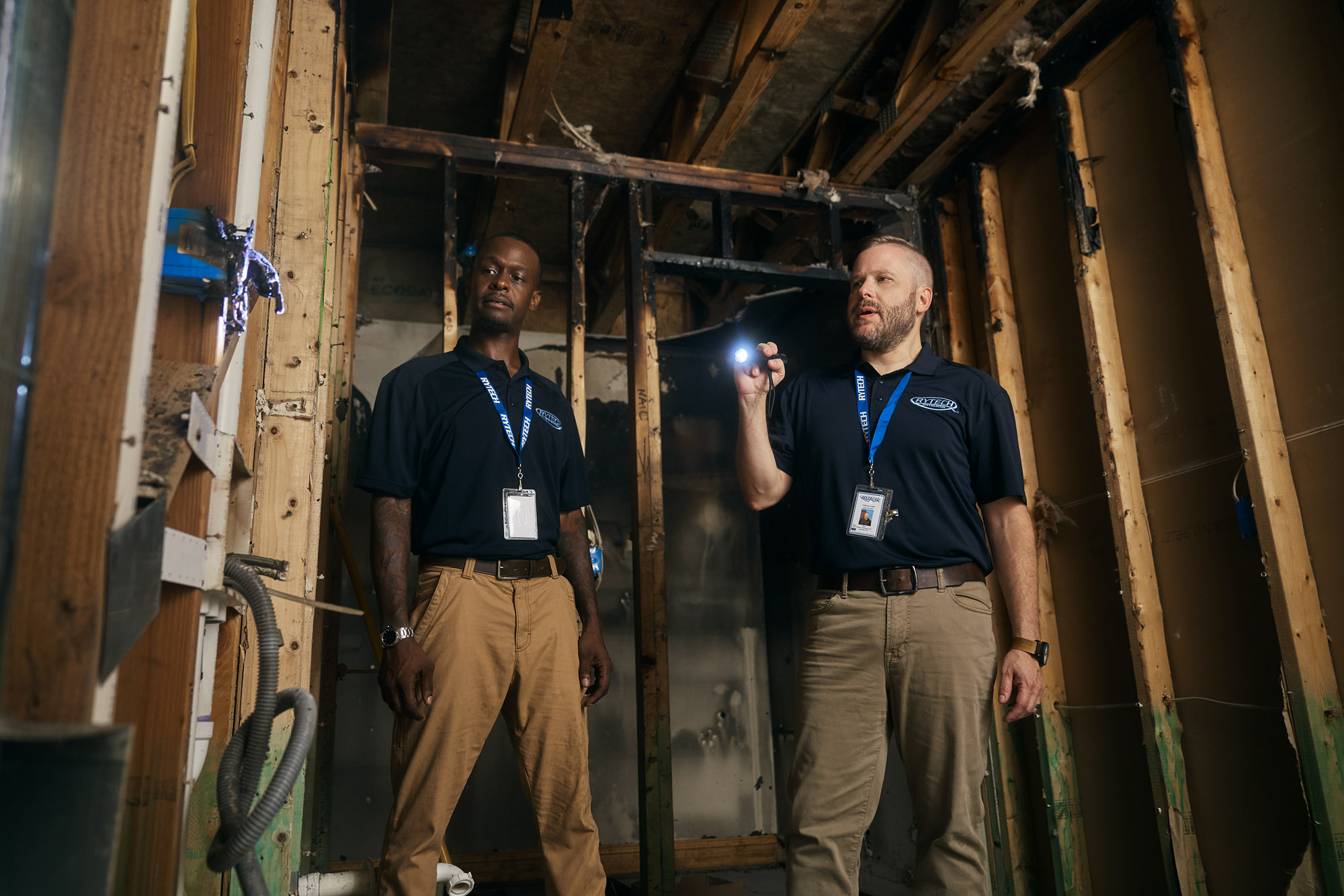
A professional fire damage inspection looks beyond burned materials. Technicians evaluate visible fire and heat damage along with smoke and soot distribution, odors, building assemblies, contents, possible HVAC involvement, and moisture introduced during firefighting.
Smoke pathways can make the affected area much larger than the burn area. Professional fire and smoke guidance recognizes that a recirculating HVAC system can provide a pathway from a structural fire source into other areas of a building. Professional judgment combines direct observations, project conditions, training, work experience, and other reliable information when developing the restoration approach.
Water requires its own investigation. ANSI/IICRC S500 calls for restorers to identify and document water migration using appropriate moisture-detection equipment. Moisture sensors, moisture meters, thermo-hygrometers, infrared thermometers, and thermal imaging cameras can help with that process. Thermal imaging can reveal surface-temperature patterns associated with possible moisture, while moisture meters are used to verify those findings.
The standard also notes that water can move underneath walls or come from above, so adjoining rooms may need inspection even when floor surfaces do not look wet.
Picture a kitchen fire in a Fort Myers home. The flames may stay near the stove, smoke may travel through the living area and HVAC system, and firefighting water may migrate beneath nearby flooring. Professional inspection follows each of those pathways instead of assuming that all damage ends at the kitchen doorway.
How Do I Start an Insurance Claim After a Fire?

Contact your insurance company or agent and report the loss. Have your policy information available and explain what happened. Your adjuster can then evaluate the claim according to your policy's coverage, limits, deductible, exclusions, and other provisions.
Documentation helps everyone understand the loss. Photographs, videos, receipts, home inventories, and records of affected belongings can provide useful information. Restoration documentation adds professional observations, measurements, moisture readings when applicable, photographs, and records of work performed.
Homeowners policies commonly contain different forms of coverage for the dwelling, belongings, other structures, and additional living expenses following a covered fire. The exact coverage available depends on the individual policy.
Most homeowners do not work through property claims regularly, so having experienced people around you can make the process easier to understand. Restoration professionals, agents, adjusters, and carriers each have different roles, but organized communication keeps those roles connected.
Rytech Restoration of Lee & Collier Counties works with insurance professionals, provides direct insurance billing when applicable, and is preferred by major carriers. Jon Lavender also brings experience from both sides of the process because he previously worked as a large-loss adjuster for a national insurance carrier.
What Is the Difference Between Professional Fire Restoration and DIY Cleanup?
A black residue on a wall may look like ordinary dirt. Soot is different because its characteristics depend partly on what burned.
Cooking oils, wood, plastics, fabrics, electronics, synthetic materials, and other household products can create different residues. Those residues can interact differently with painted drywall, wood, metal, tile, stone, flooring, upholstery, and other surfaces.
Professional restoration begins by evaluating the residue and the affected material. Technicians can then choose a cleaning process appropriate for those conditions. Industry fire restoration guidance supports a stepwise approach that progresses from less aggressive cleaning methods toward more aggressive methods when needed.
The larger advantage of professional restoration is the ability to look at the whole loss. Smoke distribution, odor, moisture, contents, HVAC systems, and affected building assemblies may all need attention.
Rytech follows a restoration-first approach. Materials that can be successfully cleaned, dried, and restored are treated accordingly, helping reduce unnecessary demolition and costly material removal. Materials damaged beyond restoration can then be identified and removed as part of the mitigation scope.
What Does Fire Damage Restoration Typically Cost?
Fire damage restoration costs vary widely because the scope can range from localized smoke cleaning to a major loss involving multiple rooms, contents, water damage, and structural materials.
Current 2026 national consumer-market data from Angi places professional fire damage restoration at an average of approximately $27,477, with most projects ranging from $3,083 to $52,031. The same source lists water damage associated with fire restoration at approximately $1,000 to $6,000 and soot removal at approximately $2,000 to $6,000. These are broad national consumer estimates, not Fort Myers project prices.
The affected square footage is only one factor. Fire type, amount of soot, materials involved, contents, water migration, odor conditions, accessibility, labor, and the amount of material that can be restored all influence the final scope.
Restoration decisions matter here. If flooring, walls, cabinets, or other materials can be successfully cleaned or dried, the project may involve less removal than a loss where heat has damaged those materials beyond restoration.
Insurance compensation depends on the individual policy and covered loss. Your insurance professional can explain how the deductible, limits, dwelling coverage, personal property coverage, and other policy provisions apply to your claim.
How Are Smoke and Soot Removed After a Fire?
Smoke cleanup starts with finding the affected area. The restoration team evaluates where residues traveled and what types of surfaces and contents they contacted.
Cleaning methods then need to match those materials. Painted drywall, wood, metal, tile, flooring, upholstery, and household contents can respond differently to soot and cleaning processes. Professionals use the condition of the surface and results of cleaning to determine how the process should progress.
This stepwise approach supports restoration rather than automatic removal. Fire restoration guidance recognizes a progression from lighter surface cleaning toward more aggressive methods as conditions require. It also recognizes wood, steel, concrete, and masonry as common structural materials that restorers need to understand when evaluating fire impact.
HVAC systems deserve separate consideration. In a structural fire, recirculating air systems can provide a pathway from the fire source into other portions of the building. When inspection findings indicate possible HVAC involvement, further assessment helps determine the appropriate restoration approach.
Rytech Restoration of Lee & Collier Counties provides professional fire and smoke damage restoration services in Fort Myers for residential and commercial properties throughout Southwest Florida.
How Are Smoke Odors Removed After a Fire?
A persistent smoky smell can provide another clue about the extent of the damage. When a room looks clean but continues to smell like the fire, affected residues or materials may still need attention.
Professional deodorization works alongside cleaning rather than simply covering the odor. Technicians identify affected surfaces and materials, address residues, and then select deodorization procedures suited to the conditions.
Depending on the project, that process can involve detailed cleaning, ventilation, air filtration, contents treatment, and specialized deodorization methods. Porous materials and contents may require different treatment from hard surfaces.
Professional fire restoration guidance recognizes both visual observations and odor assessment as tools that can help evaluate restoration results. That gives technicians another way to judge whether the restoration work has addressed the conditions identified in the work plan.
What Happens if Mold Develops After Fire Sprinkler Use?
Fire suppression can introduce significant amounts of water into a property. Sprinkler discharge and fire hoses can affect drywall, flooring, insulation, cabinets, framing, furniture, and other materials.
Professional water mitigation starts by determining where that water traveled. ANSI/IICRC S500 directs restorers to evaluate the extent of water migration, establish dry standards, and create drying goals for affected materials. Those drying goals are target moisture levels established by a qualified restorer and are intended to return structures, systems, or contents to an acceptable condition while inhibiting microbial growth.
When mold growth develops, the project may also require professional mold remediation. ANSI/IICRC S520 addresses inspection, containment, structural remediation, contents, HVAC considerations, documentation, and post-remediation evaluation.
Rytech's mold remediation approach focuses on professional containment, removal of affected mold growth, cleaning, and reducing harmful mold spores in the indoor environment. Moisture conditions also need to be addressed because successful remediation and drying work together.
Fort Myers adds a practical local consideration. Warm, humid outdoor conditions can influence the drying environment, so restoration professionals rely on measurements and drying science rather than assuming a material is dry because its surface feels dry.
How Is Structural Damage Handled After a Fire?
Fire and heat can affect roof assemblies, framing, floors, walls, and other structural components. The severity depends on the material, temperature, duration of exposure, and proximity to the fire.
Southwest Florida construction can include concrete block, wood roof systems, wood framing components, engineered materials, drywall assemblies, steel, and masonry. Each material reacts differently to heat.
Professional fire restoration guidance recognizes wood, steel, concrete, and masonry as typical structural building materials. Restorers should also recognize evidence that heat or fire may have affected structural integrity and identify situations that require additional expertise.
Rytech's role centers on mitigation and restoration. The team evaluates affected materials, restores materials that can be successfully saved, and removes materials that are beyond restoration. When structural engineering, electrical evaluation, HVAC assessment, or another specialized discipline is needed, those professionals can evaluate the systems within their expertise.
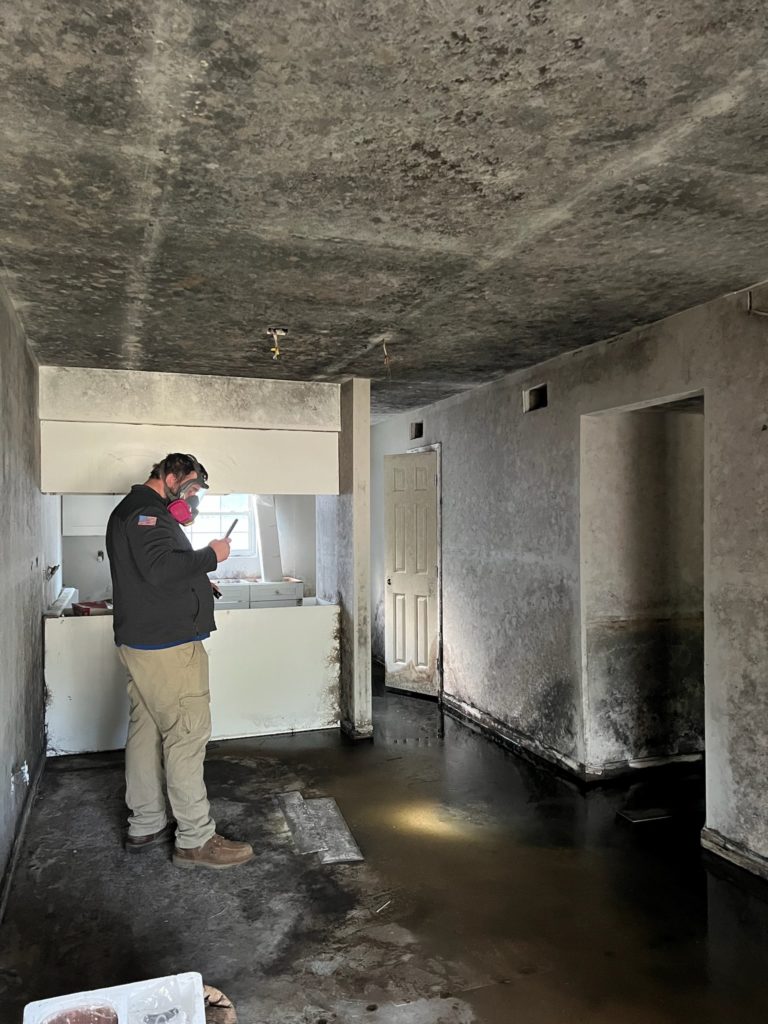
For a Fort Myers homeowner looking at a blackened ceiling or damaged wall, appearance alone does not determine what needs to come out. Inspection provides the information needed to make that decision.
Can Personal Belongings Be Saved After Fire Damage?
Many belongings can potentially be restored. Exposure to smoke does not automatically mean every item in an affected room must be discarded.
Furniture, clothing, household goods, décor, and other contents can be evaluated according to their material, condition, heat exposure, soot, odor, moisture, value, and ability to respond to cleaning. Some belongings may be cleaned in place, while others can benefit from professional packout.
A packout creates an organized process for inventorying, documenting, moving, cleaning, and storing selected belongings while restoration progresses. It can also clear space for technicians working inside heavily affected rooms.
Fire restoration guidance recognizes contents and personal property as their own part of the restoration process. When property cannot be restored and insurance compensation is involved, coordination and documentation help materially interested parties understand how those items are handled.
Rytech Restoration of Lee & Collier Counties offers contents cleaning and packout services as part of its local fire and smoke restoration capabilities.
What Health and Safety Conditions Can Remain After a Fire?
Once the flames are out, several conditions may still need evaluation. Soot and smoke residues can remain on surfaces, heat may have affected building materials, electrical components may require assessment, and firefighting water can remain inside materials that appear dry.
The visible burn area does not always define the full affected area. Smoke can travel through connected rooms and mechanical systems, while water can migrate underneath walls and flooring. These two damage pathways can move in different directions.
Commercial properties can add another level of complexity. Restaurants, offices, hotels, multifamily buildings, retail spaces, and other Lee County properties may contain larger mechanical systems, more contents, multiple occupants, and several parties involved in recovery.
Ask a more useful question than “Where was the fire?” Ask “Where did the heat, smoke, soot, odor, and water actually travel?” A professional inspection builds the answer from the conditions found inside the property.
How Long Does Fire Damage Restoration Usually Take?
There is no universal timeline for a fire loss. A limited smoke-cleaning project can move much faster than a multi-room fire involving wet materials, extensive contents, structural evaluation, odor treatment, and specialty trades.
Current 2026 consumer-market estimates place the broader fire restoration process at approximately two weeks to 12 months, with an average of about four months when all phases of a larger recovery are included. Rytech's mitigation and restoration work may represent only one portion of that overall timeline.
Drying time, affected square footage, soot conditions, contents processing, access, specialty evaluations, material availability, and insurance coordination can all affect progress. An inspection provides the information needed to establish a project-specific scope instead of relying on a generic timeline.
Communication becomes especially valuable on commercial or multifamily losses. Property owners and managers may be coordinating employees, tenants, insurance professionals, vendors, and building access at the same time.
Rytech Restoration of Lee & Collier Counties provides daily job monitoring as part of its local service approach, helping customers and insurance professionals follow the restoration process as work progresses.
How Do I Choose a Fire Damage Restoration Company in Fort Myers?
Start with training and qualifications. Look for relevant IICRC certification, proper licensing and insurance, experience with fire and smoke losses, and a clear process for inspecting and documenting the property.
Then ask about the company's restoration philosophy. Does the team evaluate materials before removing them? How will technicians determine the extent of smoke and water migration? What information will be documented? How will the company communicate with you and your insurance professionals?
Local experience also matters. Fort Myers properties present a mix of construction materials and environmental conditions, while large residential and commercial losses may require coordination among several different professionals.
Rytech Restoration of Lee & Collier Counties combines local expertise with Rytech's established restoration systems. The location provides 24/7 emergency services, IICRC-certified and trained technicians, daily job monitoring, insurance coordination, direct billing where applicable, and pricing based on industry standards.
Owner Jon K. Lavender brings more than 20 years of restoration and insurance experience to that process. His background includes building restoration companies, working as a large-loss adjuster, earning IICRC Water Damage Restoration and Applied Structural Drying certifications, and holding multiple Florida professional licenses.
For homeowners, commercial owners, property managers, agents, adjusters, carriers, and referral partners, that combination provides a local team that understands both the technical restoration process and the communication needed around a property claim.
How Can Fort Myers Homeowners Reduce Future Fire Risk?
Prevention starts with daily habits. Stay attentive while cooking, keep combustible materials away from heat sources, maintain electrical and mechanical equipment, and handle outdoor ignition sources carefully.
Garages and storage areas deserve attention because Southwest Florida households may store gasoline, propane tanks, rechargeable batteries, solvents, aerosols, and other potentially flammable products. Lee County provides a household chemical waste program for many of these materials.
Outdoor conditions should be part of the plan too. Lee County's January 2026 burn ban showed how dry conditions can increase fire concerns even in a region better known for tropical weather and humidity. Checking local fire restrictions before outdoor burning helps property owners respond to changing conditions.
Maintain smoke alarms and create an escape plan that everyone in the household understands. Property owners can also review their insurance coverage periodically and maintain an updated home inventory. Photos or video of rooms, major possessions, and valuable belongings can provide useful documentation if a future loss occurs.
Get Inspected to Stay Protected After Fire or Smoke Damage
Once firefighters have controlled the emergency, your next question should be straightforward: How far did the damage travel?
Rytech Restoration of Lee & Collier Counties helps property owners investigate that question throughout Fort Myers, Cape Coral, North Fort Myers, Fort Myers Beach, Lehigh Acres, Estero, Bonita Springs, Sanibel, Naples, Marco Island, Immokalee, and surrounding communities across Lee, Collier, and Hendry counties.
If your home, rental property, commercial building, or insured property has been affected by fire, smoke, soot, odor, sprinkler discharge, or firefighting water, call Rytech Restoration of Lee & Collier Counties at (239) 274-0043. A live specialist can help you understand the next steps and dispatch a certified technician when restoration services are needed.
GET INSPECTED TO STAY PROTECTED.
FAQs: Answering Your Pressing Fire Damage Repair Questions
At Rytech of Lee & Collier Counties in Fort Myers, we understand that fire damage can be overwhelming. To support you during this challenging time, we’ve put together a list of frequently asked questions (FAQs) to help you better understand our services, the restoration process, and what to expect when you choose to work with us.


